Voice typing that finally understands your accent
You slow down, you flatten your vowels, you over-enunciate like a newsreader, and the machine still says 'I didn't catch that.' The problem was never your accent. It was who the machine was built to hear.
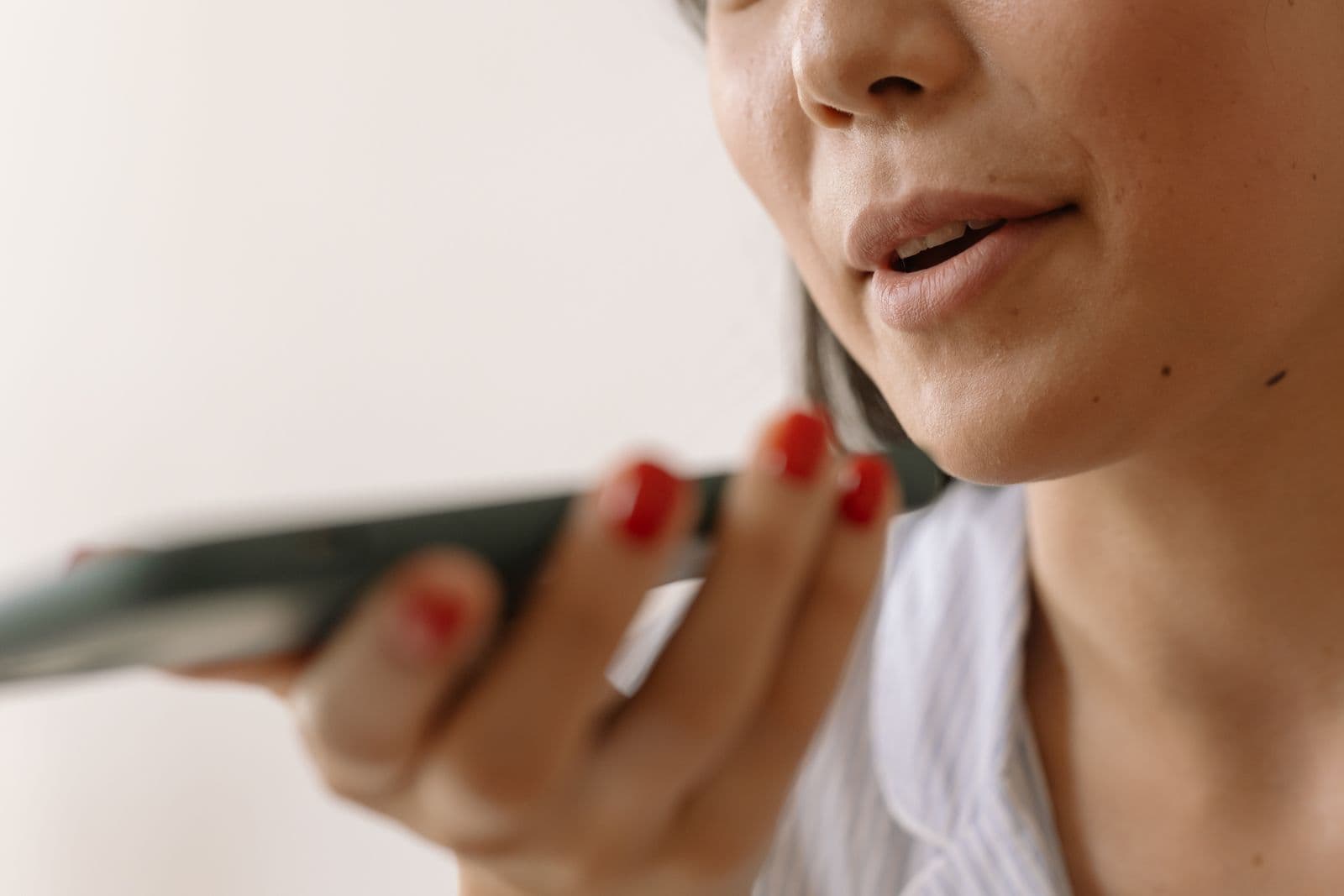
Image: Pexels
You know the ritual. A robotic voice says, 'In a few words, tell me why you're calling.' You say, 'Billing.' A pause. Then: 'I'm sorry, I didn't catch that.' So you try again, louder this time. Still nothing.
By the third try you are doing the performance. You slow way down. You flatten your vowels. You over-enunciate every syllable like a 1950s newsreader. 'BI-LLING.' And it STILL fails, and by now there is a small, quiet shame sitting in your chest, as if you had failed some test you never signed up for.
You were never the problem
Here is the part worth saying out loud. You are fluent in two or three languages. You carry a phone that cost a thousand dollars. And a piece of software still treats your voice like gibberish. That is not a you problem. That is a design problem, and for years almost nobody framed it that way.
The truth is simpler and kinder than the shame suggests: you were never auditioning badly. You were auditioning for a machine that only had ears for one accent.
It was never your accent. It was who the machine was built to hear
Most built-in dictation, the kind baked into your phone or laptop, runs a small model that lives on the device. Small models are trained on whatever voices were easiest and cheapest to collect at scale, which skews heavily toward 'standard' native speakers. When your voice sits outside that narrow band, accuracy falls off a cliff.
This is not a hunch. A 2020 Stanford study (Koenecke et al., published in PNAS) tested five leading commercial speech recognizers, from Amazon, Apple, Google, IBM, and Microsoft. It found they misrecognized speakers unevenly: an average word error rate of 0.35 for Black speakers versus 0.19 for white speakers, nearly double.
Two honest caveats, because the details matter. That study measured a racial and dialect gap, African American Vernacular English versus white speakers, all of them US English speakers. It did not study non-native or Latino accents. So do not read it as proof about immigrant or LATAM voices specifically. Read it as hard evidence of something broader: speech recognition carries a narrow-band bias toward the voices it was trained on.
The researchers even traced the disparity to the underlying acoustic models. The gap persisted on identical phrases spoken by both groups, which points straight at training data that under-represented those voices. If a machine can stumble that badly on one group of native speakers, it is not a stretch to see how an accent it heard very little of during training would trip it too. Adjacent case, not identical, but the mechanism is the same.
The reframe
The machine does not hear a 'wrong' accent. It hears an unfamiliar one, because it barely met voices like yours while it was learning. That is a data gap, not a flaw in how you speak.
What changed: an engine that heard the whole world
The fix was never to speak differently. It was to train on more of the world. OpenAI's Whisper was trained on 680,000 hours of multilingual, multitask audio (Radford et al., 2022). Of those hours, 117,000 cover 96 other languages and another 125,000 are non-English speech translated into English, so roughly a third of its training audio was non-English. That is a completely different diet from an English-only model raised on native newsreaders.
The payoff is real and worth being precise about. Whisper's multilingual training makes it markedly more robust to accents than the older English-only engines. But it is not magic. Independent evaluations confirm accuracy still drops on strong non-native accents and on disfluent, stop-start speech. Dramatically better, not perfect. Anyone promising perfect is selling something.
How to actually make dictation hear your accent
The good news is that most of this works no matter which app you use. You do not need our product to stop the phone-tree shame. You need the right stack and a couple of habit changes.
Stop performing
Speak the way you actually speak. Modern engines were trained on natural, conversational audio, not exaggerated diction. Over-enunciating can make you sound less like the voices Whisper learned from, not more.
Use a Whisper-based tool, not the OS built-in
This is the single biggest lever. Swap the small on-device model your operating system ships with for a tool that runs a Whisper-grade recognizer. Same voice, very different result.
Add custom vocabulary
Teach it your name, your city, your company, the technical terms you say all day. Feeding those in biases both the transcription and the cleanup so the words that are unique to you come out spelled right.
Let an AI cleanup pass fix the residue
A good stack runs a language-model pass after transcription that repairs punctuation and small residual slips, so a near-miss becomes a clean sentence instead of a garbled one.
Mind your mic
Get reasonably close to a decent microphone and cut room echo. None of the software above can rescue audio that arrives thin and boomy.
Dictate in the language you think in
If you think in Spanish, do not translate in your head while you talk. Dictate in Spanish and have the tool output English. You get cleaner input, because you are speaking your strongest language, and the machine does the language switch.
The honest limits
No tool clears every case, and pretending otherwise is how the phone tree earned your distrust in the first place. Here is where even a good stack still struggles.
- Fast, code-switched Spanglish is the hardest case. Bouncing between two languages in the same breath, at speed, is genuinely difficult for any current engine.
- Rare names and niche terms need teaching once. An unusual surname or a made-up product name will miss until you add it to custom vocabulary. After that, it sticks.
- Results vary by speaker, mic, and environment. A strong accent, a noisy room, or a cheap microphone will each pull accuracy down. Improvement is real, but it is a range, not a guarantee.
So what should you use
Boil it down and the answer is a stack, not a single feature: Whisper-grade recognition so the engine has actually heard voices like yours, an AI cleanup pass to repair the small residuals, and custom vocabulary so your names and terms land right. Any tool that gives you all three will treat your accent far better than the dictation built into your OS.
| OS built-in dictation | A Whisper-based stack | |
|---|---|---|
| Training diet | Skews to standard native voices | 680k hours, roughly a third non-English |
| Your accent | Often struggles | Markedly more robust (not perfect) |
| Custom vocabulary | Usually none | Teach it your names and terms |
| AI cleanup | Raw transcript | Punctuation and residuals fixed |
Golem is one honest implementation of exactly that stack: Whisper large-v3-turbo for recognition, an AI cleanup pass, and custom vocabulary you can teach your name and terms. It works inside any app you already use, the browser, your editor, chat, email. We rank it fairly: it will not beat physics on fast Spanglish or a bad mic, and we do not promise flawless accuracy. What it does is drop the built-in model that never learned your voice.
And that is the real point, the counter-position to every app that promises to 'fix' or 'neutralize' your accent. We do not correct your accent. We hear it. Because the goal was never to erase how you sound so a machine would finally let you through. The goal is to stop needing to. No more slowing down, no more flat newsreader vowels, no more small shame on the third try. You just talk, and the words show up.
Frequently asked questions
Why doesn't my phone's dictation understand my accent?
Built-in dictation usually runs a small on-device model that skews heavily toward 'standard' native voices, so accents outside that narrow band lose accuracy. Switching to a Whisper-based tool, which was trained on far more of the world's voices, is the biggest single fix.
Does Whisper work if I speak English with a Latino accent?
Much better than the older English-only engines, because roughly a third of Whisper's 680,000 training hours were non-English. It is not perfect on strong accents, but it is dramatically more robust than what your OS ships with.
Do I have to change how I speak?
No, and you should not. Modern engines were trained on natural speech, so over-enunciating can actually hurt. Speak the way you normally do.
What about my name or unusual words it keeps missing?
Add them to custom vocabulary once. That biases both the transcription and the cleanup pass so those specific words come out right from then on.